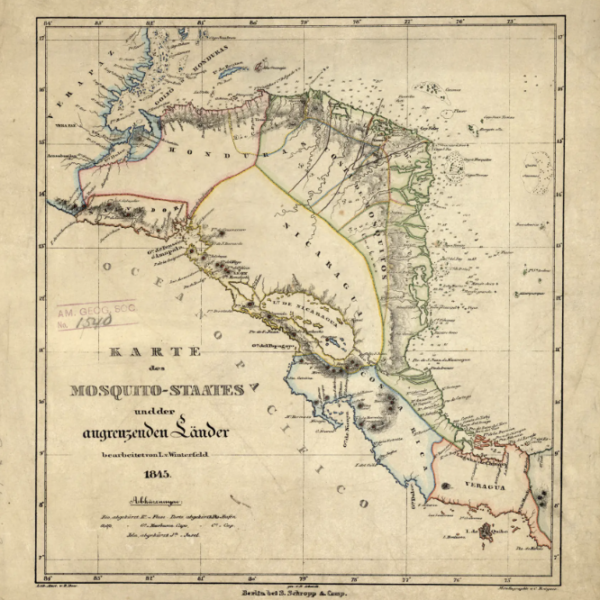
Welcome to Unit 3!
Unit’s Essential Questions:
How did Indigenous slave trades function as systems of power in the Carolinas and the Miskito Shore?
How did geography, warfare, and imperial rivalry shape different forms of Indigenous enslavement?
How does examining alternative slave trades change our understanding of slavery in the Americas as a whole?
-
Unit 3 begins from a simple but disruptive premise: slavery in the Americas did not operate through a single system, a single population, or a single geography. Indigenous enslavement was not marginal to colonial development. It was foundational. This unit asks students to confront that fact and to reckon with why it has been so consistently excluded from dominant historical narratives of slave routes. Many students have been taught about the Atlantic Slave Trade but other slave routes that were pervasive have been excluded from many curriculums. Slavery in this unit is not treated only as forced labor. It is examined as a process of rupture. Relations to land were severed. Kinship networks were broken. Political sovereignty was undermined. Historical memory itself was reshaped. Indigenous enslavement functioned as a tool through which colonial powers reorganized the Americas while obscuring the violence required to do so. Our curriculum explores these themes continuously.
Read MoreThe unit centers two regions where Indigenous slave trades were structural rather than peripheral: the Carolinas and the Miskito Shore. These cases are not presented as exceptions. They are presented as evidence. They reveal how colonial economies depended on Indigenous captivity, forced mobility, and dispossession long before the Atlantic Slave Trade. The Carolina colony was designed as a commercial project. Profit came first. Indigenous enslavement was not an unintended byproduct of settlement. It was a deliberate strategy. Raids, wars, and trade networks worked together to funnel Indigenous captives into systems of sale and export. Imperial conflicts such as Queen Anne’s War intensified these dynamics, transforming warfare into a justification for mass enslavement. Entire communities were destabilized. Refugee migrations reshaped the Southeast. This was not only demographic collapse. It was the systematic destruction of Indigenous relationships to place, safety, and continuity.
The unit refuses easy moral binaries. Indigenous participation in slave raiding is examined without simplification. Students are asked to understand these actions within a landscape defined by colonial coercion, survival under pressure, and constrained choice. Power did not operate evenly. Neutrality was rarely possible. This framing preserves complexity while maintaining focus on harm and consequence. Lesson 2 shifts the focus from events to evidence. Runaway and captive advertisements are treated not as transparent windows into the past but as artifacts of colonial authority. These documents normalize Indigenous enslavement through language that reduces people to bodies, skills, and value. At the same time, they omit capture, violence, and family separation. What appears routine in the archive conceals extraordinary violence. These advertisements show how enslavement operated not only on people but on the historical record itself.
The absence of Indigenous voices in these sources is not framed as an unfortunate gap. Rather, it is evidence of who was allowed to speak. Who was allowed to speak. Who was assumed to be the reader. What ideas about ownership and permanence went unquestioned. Students learn to read silence as a product of power rather than a failure of documentation. The unit then expands outward to the Miskito Shore, complicating any single story of victimhood or resistance. Geography, imperial rivalry, and Indigenous political power intersected to produce a different configuration of slavery. The Miskito Kingdom leveraged British alliances to maintain autonomy and regional dominance, even as those alliances drew the community into slave raiding and captivity networks. Agency is visible here, but it is constrained and costly. Survival did not mean freedom from violence. It often meant participation in systems that reproduced it.
By examining primary sources such as registries and imperial correspondence, students encounter a world where Indigenous and African lives were counted, categorized, and moved across boundaries. These records expose how colonial law repeatedly failed to restrict Indigenous enslavement. Bureaucracy becomes another mechanism of control. Identity, belonging, and futurity are reduced to administrative categories. Students are asked not just to analyze sources but to interrogate the archive itself. What stories are easy to tell? Which ones require reconstruction? Why has plantation slavery has come to stand in for slavery as a whole? This lesson positions students as interpreters of history rather than passive recipients of it.
The culminating formative assessment asks students to synthesize across regions, source types, and silences, compiling what they have learned during the previous lessons. By comparing systems, analyzing language, and naming absences, students demonstrate that Indigenous slavery was not an alternative footnote. It was a central mechanism of colonial expansion. Remembering it requires more than adding information. It requires changing the frame. Unit 3 ultimately asks students to confront an uncomfortable truth: history is not only what happened. It is what was preserved, justified, and forgotten. Indigenous enslavement was erased not because it was insignificant, but because it disrupted the stories colonial societies wanted to tell about themselves. This unit insists that those stories be reconsidered and that what was taken from the past be named.
Direct Links
-
Unit Three Overview
Lesson 1: Lecture and Activity- Carolina Slave Trade
How did the Carolina colony depend on the enslavement of Native Americans for its survival and growth? Why did imperial wars like Queen Anne’s War intensify slave raiding in the Southeast? Why did some Indigenous groups participate in slave raiding, and what risks did that participation carry? Why might colonial governments have kept detailed trade records for deerskins but not for enslaved Indians? How did the Carolina Indian slave trade reshape the geography and demographics of the Southeast?
Lesson 2: Primary Source Analysis – Advertisements (short lecture)
How do runaway and captive advertisements function as tools of colonial power rather than neutral historical records? What is missing or erased in these advertisements, and why is that absence historically meaningful? In what ways does language shape how freedom, captivity, and humanity are understood in historical sources? How does the difference between runaway advertisements and captive advertisements change our understanding of Indigenous resistance and agency?
Lesson 3: Lecture – Miskito Shore Slave Trade
In what ways did Indigenous political structures and alliances shift before and after English arrival? Why were England and Spain so invested in control over the Mosquito Shore, and how did this competition shape the region? How did the formation of the Miskito Kingdom reflect both Indigenous agency and British imperial strategy? What does the blending of African and Indigenous communities reveal about survival, adaptation, and resistance?
Lesson 4: Group Work Activity – Reading Between the Lines: What the Sources Don’t Say
What can primary sources reveal about Indigenous slavery? And what do they intentionally or unintentionally hide? How do power, authorship, and audience shape what is recorded in historical documents? Why are alternative slave trades often erased from mainstream histories of American slavery?
Lesson 5: Formative Assessment – Trifold Presentation Board
How did Indigenous slave trades function as systems in both the Carolinas and the Miskito Shore? What similarities and differences existed between these two slave trades? What do primary sources reveal and conceal about Indigenous enslavement? Why have these histories been minimized or erased in traditional narratives of slavery?
-
Unit Three – Download
-
Education Standards
Common Core
CCSS.ELA-Literacy.RH.9-10.1
CCSS.ELA-Literacy.RH.9-10.3
CCSS.ELA-Literacy.RH.9-10.10
CCSS.ELA-Literacy.RH.11-12.3
CCSS.ELA-Literacy.RH.11-12.5
CCSS.ELA-Literacy.RH.11-12.7
CCSS.ELA-Literacy.RH.11-12.9
Rhode Island
SSHS.USI.1.2: The impact of European colonization on Indigenous life
SSHS.USI.1.4: The emergence of the trans-Atlantic slave trade
SSHS.USI.2.1: Establishing colonial economies and governments
SSHS.USI.2.2: British imperial policies and colonial responses
APUSH:
UNIT 1 – Period 1: 1491–1607
- 1.2 Native American Societies Before European Contact
- 1.3 European Exploration in the Americas
- 1.5 KC-1.2.II.C
- European traders partnered with some West African groups who practiced slavery to forcibly extract enslaved laborers for the Americas. The Spanish imported enslaved Africans to labor in plantation agriculture and mining.
- 1.6 Cultural Interactions Between Europeans, Native Americans, and Africans
UNIT 2 – Period 2: 1607–1754
- KC-2.1
- Europeans developed a variety of colonization and migration patterns,influenced by different imperial goals, cultures, and the varied North American environments where they settled. They competed with each other and AmericanIndians for resources
- KC-2.1.III
- Competition over resources between European rivals and American Indians encouraged industry and trade and led to conflict in the Americas.
- KC-2.2
- The British colonies participated in political, social, cultural, and economic exchanges with Great Britain that encouraged both stronger bonds with Britain and resistance to Britain’s control
- KC-2.2.I
- Transatlantic commercial, religious, philosophical, and political exchanges led residents of the British colonies to evolve in their political and cultural attitudes as they became increasingly tied to Britain and one another
Unit 3 Lessons
Lesson 1: Lecture and Activity- Carolina Slave Trade
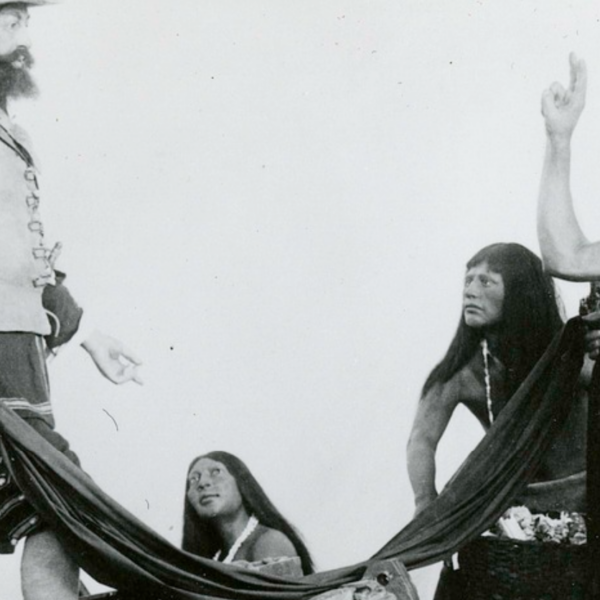
Lesson 1: Lecture and Activity- Carolina Slave Trade
Lesson 2: Primary Source Analysis – Advertisements (short lecture)
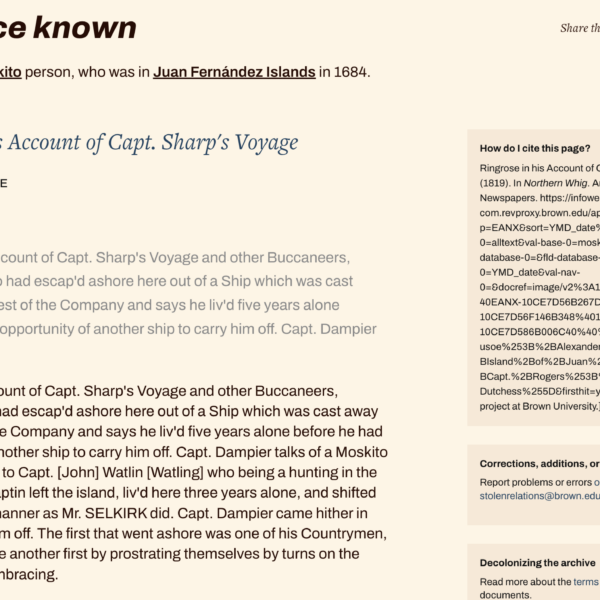
Lesson 2: Primary Source Analysis – Advertisements (short lecture)
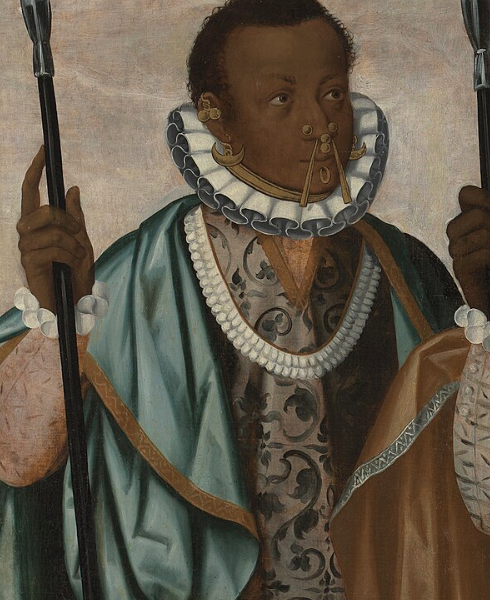
Lesson 4: Group Work Activity – Reading Between the Lines: What the Sources Don’t Say
Lesson 4: Group Work Activity – Reading Between the Lines: What the Sources Don’t Say
Lesson 5: Formative Assessment – Trifold Presentation Board